
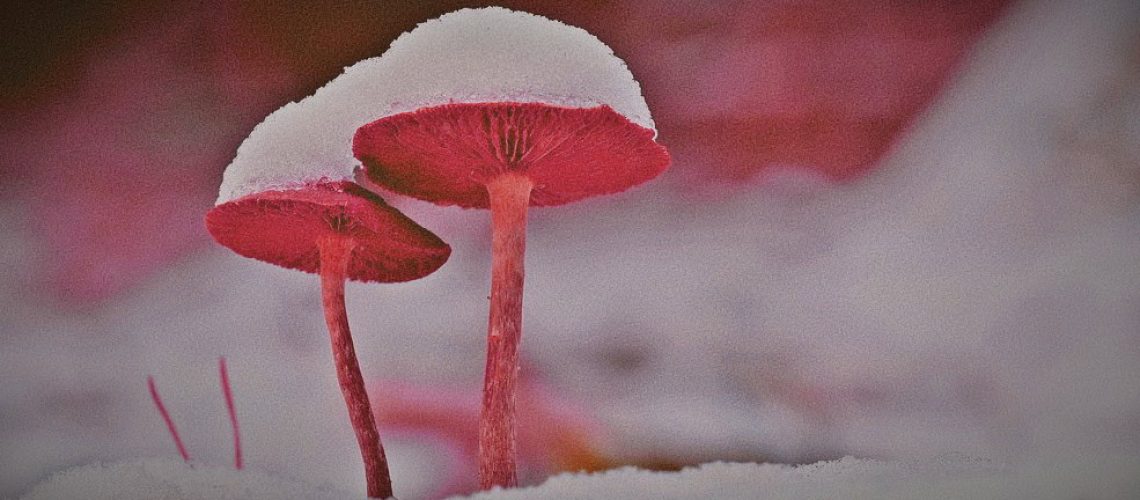
With Christmas already in the rearview mirror, winter starts in earnest to make itself known. It offers us chills and sniffles, grey skies and dark mornings. As you know, this can quickly begin to take a toll on our health, mood, energy levels, and overall vibe. Luckily nature offers a seasonal pick-me-up; medicinal mushrooms.
You’ve probably heard all about the benefits of medicinal mushrooms. But did you know that many of their health-boosting qualities become even more essential during the winter months?
As well as numerous holidays, indulgent foods, and twinkling lights, the ‘most wonderful time of the year’, also brings along colds and flu, compromised immune systems, Seasonal Affective Disorder (SAD), and vitamin D deficiency, to name but a few seasonal treats. On top of that, the festive season itself tends to find us spreading ourselves rather thin, perhaps too busy to prioritize our own well-being.
Luckily nature has a holistic answer to our winter woes. Mushrooms. And, it’s not just the medicinal kind that can give us a boost. Everyday culinary mushrooms are a key part of keeping us healthy in the winter months — and psilocybin microdoses are a light in the darkness too.
In this article we will explore the mushrooms — from culinary, to medicinal, to psychedelic — that can help us through the winter months.
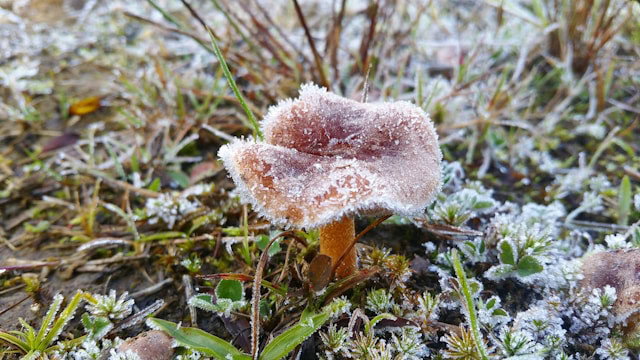
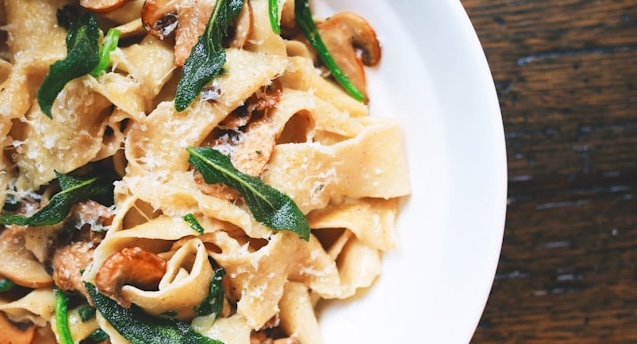
Do not underestimate the mushrooms in your local supermarket or Saturday farmer’s market. A recent study found that people who eat 18g of mushrooms a day, have a 45% lower chance of developing certain cancers. Introducing any amount of mushrooms to your diet can be beneficial (you don’t have to have them everyday — unless you really love ‘em!). From shiitake, to oyster, to button mushrooms or porcini, mushrooms are packed full of essential nutrients that can help you through the winter (as well as being delicious). These include:
Sure, the culinary mushrooms we name-checked above can also be described as medicinal due to their numerous health benefits. However, the mushrooms we’ve included in the medicinal section are the kind you’re more likely to consume as an extract, tea, or supplement rather than in an omelet. So who are these medical marvels?
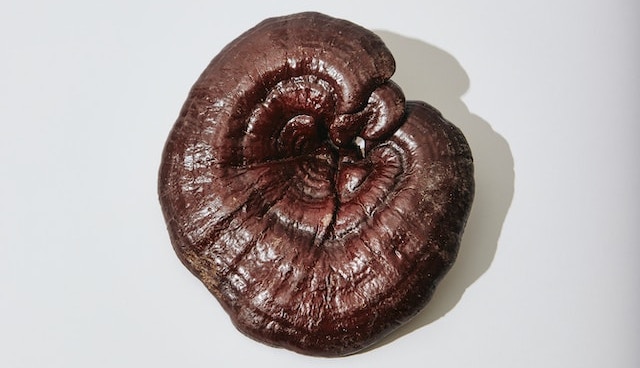
Reishi mushroom (or Ganoderma lucidum) has been used in Traditional Chinese Medicine (TCM) for hundreds of years, garnering the nickname ‘mushroom of immortality’. It is known to boost immune functioning, improve quality of sleep (ideal for those dark mornings!), and is also classified as an adaptogen. Adaptogens help our body to adapt to stress and maintain balance. This is essential when it comes to combating seasonal depression.
Other qualities that make Reishi an essential mood booster is that it is said to relax people, as well as being an anti-inflammatory. Chronic inflammation is associated with mood disorders, so the use of reishi could, in theory, indirectly help with depressive symptoms.
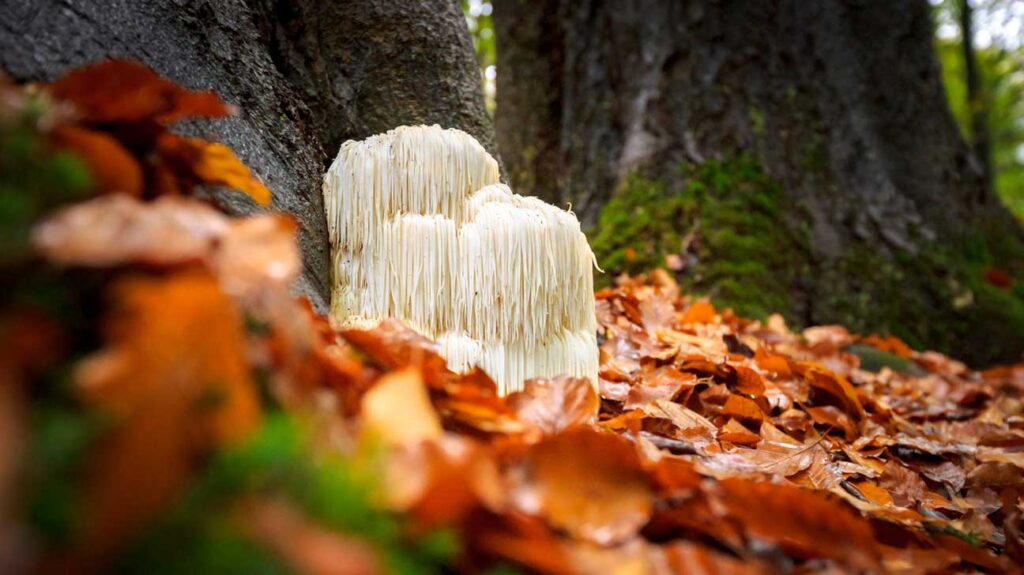
Lion’s mane is one of the darlings of the medicinal mushroom world. The shaggy, alien-looking fungus has gained attention for its cognitive and mood-enhancing properties. And as we all know, during those dark, cold months, a little lightness is essential.
Lion’s mane contains compounds that stimulate the production of brain-derived neurotrophic factor (BDNF) and nerve growth factor (NGF). These both play an essential role in the growth, maintenance, and survival of brain neurons, which can improve brain function and mood.
You ever get that gloomy winter brain-fog feeling? Well lion’s mane has been studied at length due to its cognitive enhancing effects, with findings suggesting that it can support cognitive function, focus, and memory.
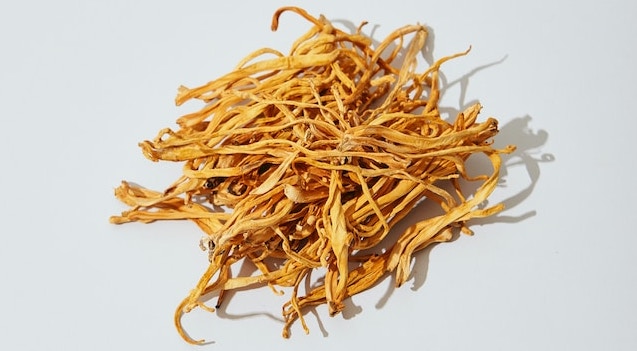
One of the challenges of winter is just how tired you can feel, whatever time of day it is. Cordyceps, the fascinating, parasitic fungus, has been prized for millenia due to its energy-boosting abilities. It supports our body’s natural production of adenosine triphosphate (ATP), the primary source of cellular energy. Additionally, like reishi, cordyceps are an adaptogen, and they can improve our consumption of oxygen at the cellular level. This is ideal for fighting fatigue, and encouraging physical activity — something that’s often deeply unappealing in the winter months. Using cordyceps can give you a spring in your step until spring is actually here!
Seasonal Affective Disorder (SAD), also known as the ‘winter blues’, is a type of depression that relates to the change of the seasons, usually during the winter months when sunlight exposure decreases.
The symptoms of SAD include:
The conventional methods of treatment for SAD include light therapy, medication, and cognitive behavioral therapy. However, these aren’t always effective, and can also be prohibitively expensive. Psilocybin mushrooms, with their potential as a treatment for a whole host of mental health conditions, many of which are overlapped by symptoms of SAD, are a new and promising prospect

The way psilocybin (the compound in magic mushrooms and truffles) can treat SAD is related to our old buddy, serotonin. One of SAD’s main contributing factors is depleted serotonin levels. Psilocybin works by binding to the 5-HT2A serotonin receptor, a receptor that is found in larger amounts in those suffering from depression. Too many 5-HT2A serotonin receptors can trigger negative self-obsession and the feeling of ‘spiralling’. This is because they cause overactivity in the prefrontal cortex, which is characteristic of people with depression.
Psilocybin also temporarily lessens the strength of the amygdala, which processes emotional responses. This softens negative emotional responses and increases the positive. If you are combining it with psychotherapy it can make you more responsive and open to the advice of your therapist, and more able to put that advice into action.
Microdosing is the practice of taking a sub-perceptual dose of a psychedelic, meaning that you get no noticeable psychedelic effects, but you benefit from enhanced mood and boosted energy levels.
Although it is a regular routine, rather than a one-off (general agreement is that a microdose every 3 days — i.e. the Fadiman technique — is the sweet spot) it is way less high maintenance than a daily medication routine, as well as having no adverse physiological side effects, and working almost immediately!
Additionally, if, once the winter season is over you want to stop microdosing, there are no adverse effects. However, microdosing can be so effective for some people that you may choose to continue regardless of the time of year!
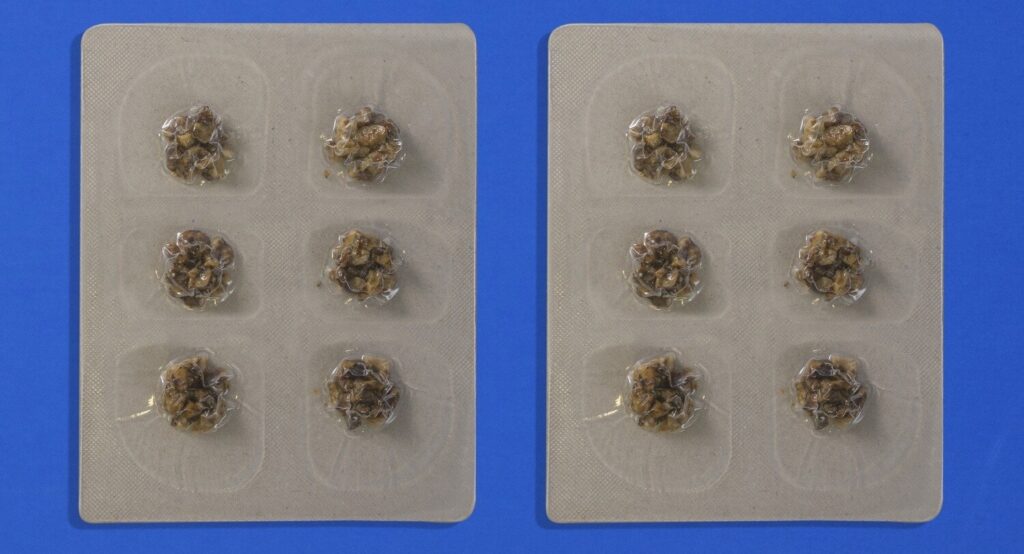
Everyone’s ideal wellness regime is different. However, here is an example of how you can easily incorporate mushrooms into your life this winter.
Morning: Begin your day with a mushroom infused coffee or tea. We recommend using lion’s mane, reishi, or a mixture of both, for a calming, as well as immune-boosting start.
Midday: Take a psilocybin truffle microdose. Doing this after your breakfast/lunch means that the psilocybin will be released more slowly, meaning a consistent mood and focus boost.
Afternoon: Experiencing an afternoon dip? Add some cordyceps extract to your smoothie or tea to support your energy levels.
Evening: Reishi is known for promoting good-quality sleep. Add some to hot chocolate or the warming beverage of choice to help you drift off.

Mushrooms — medicinal, psychedelic, and culinary — offer a natural and holistic way to navigate through the winter. In promoting resilience and well-being by utilizing the healing properties of mushrooms, we can beat the winter blues. Embracing the season as an opportunity for self-care, reflection, and nourishment can guide us through to brighter days.
easily pay with 💳 Mastercard, Visa, Amex, iDeal, GiroPay, EPS, Bancontact or Bank Transfer
easily pay with 💳 Mastercard, Visa, Amex & others
 English
  Czech
Czech  Danish
  Dutch
Dutch  Estonian
  Finnish
  French
  German
  Greek
Greek  Hungarian
  Italian
  Latvian
  Polish
  Portuguese
  Romanian
  Russian
  Spanish
  Swedish